KRI Sriwijaya: A Decisive First Step

- Created Oct 02 2026
- / 65 Read
KRI Sriwijaya: A Decisive First Step

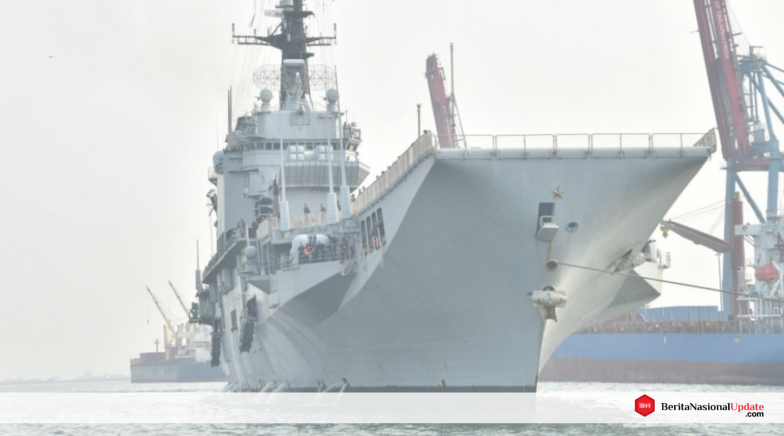
The entry of KRI Sriwijaya-100 into the ranks of the Indonesian Navy (TNI AL) this September 2026, which immediately drew attention from various circles including the international community, is truly due to one simple reason: for the first time, Indonesia is operating a large-sized aviation-capable ship, which in this instance originates from the former fleet of the Italian Navy. However, there is a pessimistic perspective regarding this defense breakthrough that merely points to its second-hand condition.
News coverage regarding KRI Sriwijaya tends to highlight three issues: the ship's age, potential modernization costs, and the unclear configuration of the aircraft to be operated. These three issues are indeed valid to question. However, if they are read without a broader strategic and institutional context, the public will lose its vision in understanding this remarkable breakthrough and will be misled, which would certainly harm the image of Indonesia as it continues to improve its defense dimensions and posture.
Of course, age remains important. A warship is not just a steel hull. The true value that needs to be considered beyond mere age lies in engine readiness, structural integrity, electrical systems, sensors, communications, weaponry, aviation capabilities, spare parts availability, and maintenance costs throughout its life cycle---all of which, naturally, would not have been ignored in the decision-making process to acquire this fleet.
In the case of Sriwijaya, on September 28, 2026, PT PAL and Fincantieri signed a memorandum of understanding to jointly determine the scope of the ship's modernization. Fincantieri, as the original designer and builder of the ship, will contribute design and platform knowledge, while PT PAL brings integration capacity, maintenance, and domestic industrial support (Fincantieri, 2026). This fact is crucial because it changes the way we understand the transfer. Indonesia is not merely buying an old capability. Indonesia is also buying the opportunity to learn, integrate, maintain, and develop a type of platform that has never previously been part of the TNI AL's operational experience.
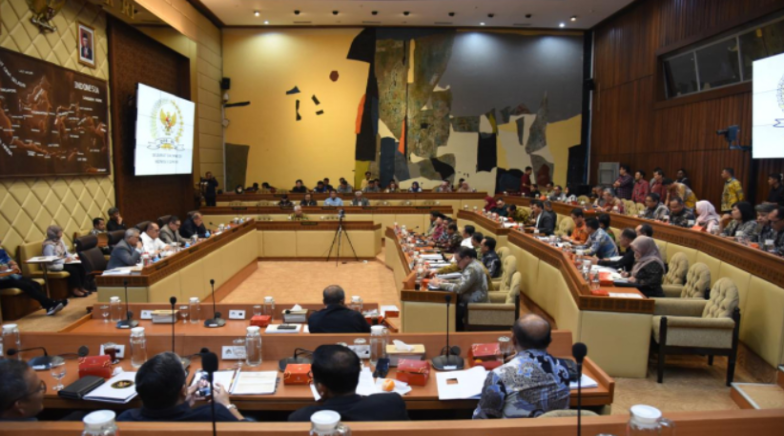
The second issue is cost. The figures of US$450 million or possibly even US$900 million that appear in the news are indeed a matter of concern. But these figures should not be treated as final costs before the modernization configuration is determined. In discussions at the House of Representatives (DPR), the government obtained approval to accept the Giuseppe Garibaldi grant valued at 54.02 million, while the needs for retrofitting, modernization, weaponry, training, and maintenance constitute different cost components (DPR RI, 2026).
From this perspective, PT PAL's involvement becomes a strategic variable. If the modernization only results in the ship returning to operations while all knowledge, system integration, and maintenance remain dependent on foreign parties, its long-term benefits are indeed limited. But if the process is used to build capabilities in design, system integration, combat management, large ship maintenance, aviation support, and life-cycle sustainment, then the policy value becomes much broader than just a single unit of a ship.
The third issue concerns the ship's function. If KRI Sriwijaya is judged solely by the standards of an aircraft carrier carrying conventional fighter jets, then the ship will indeed appear to have limitations. During its time with Italy, the Garibaldi operated AV-8B Harriers, whereas Indonesia does not possess STOVL fighter aircraft compatible with that configuration (Marina Militare, 2024).
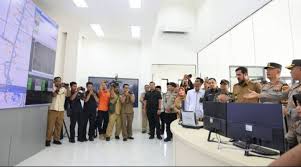
Even so, Indonesia does not have to use the ship with the same concept as Italy. The Ministry of Defense actually cites helicopter capabilities, humanitarian assistance, logistics distribution, and disaster relief as crucial parts of its operational orientation. During a ship inspection in September 2026, the Ministry of Defense stated that Sriwijaya is capable of carrying over a dozen helicopters and conducting simultaneous flight operations. The ship is also projected to support Military Operations Other Than War (MOOTW), including disaster management and logistics distribution to remote areas (Ministry of Defense RI, 2026).
In the Indonesian context, this function cannot be considered secondary. Indonesia is an archipelagic state with 17,380 islands identified by the Geospatial Information Agency in 2024. Statistics Indonesia (BPS) also highlights Indonesia's geographical character, which is dominated by water areas (BIG, 2024; BPS, 2025). At the same time, the National Disaster Management Agency (BNPB) records thousands of disaster events every year resulting in casualties, displacement, and infrastructure damage across various regions (BNPB, 2026).
When an archipelagic region experiences a major disaster, the initial problem is often not a lack of intent to help, but rather the ability to move personnel, helicopters, vehicles, food supplies, medicines, heavy equipment, and medical facilities to locations where the infrastructure is damaged or far from the center of government. A maritime platform with aviation capabilities provides one of the instruments to overcome this problem.
Furthermore, a detail on the ship's emblem featuring the Bayraktar TB3 opens up another possibility. This cannot yet be considered Indonesia's final decision to operate the TB3. Technologically, however, the TB3 has indeed demonstrated the capability to take off and land from ships with short flight decks through a series of tests on the TCG Anadolu (Baykar, 2025). This means the concept of shipborne unmanned aviation is no longer just a theoretical idea.
Should Indonesia later develop ship-based UAV capabilities, Sriwijaya's value could change significantly. The ship does not need to be understood as a miniature US aircraft carrier. It can evolve into an aviation support ship that combines helicopters, UAVs, logistics, evacuation, disaster relief, maritime surveillance, and joint operation support.
Ultimately, its strategic value will be determined by what Indonesia does after the ship is received: how its modernization is managed, how operational costs are controlled, how the national industry absorbs the knowledge, how crews and doctrines are developed, how helicopter and UAV capabilities are integrated, and how the ship is positioned within the overall TNI force structure.
Share News
For Add Product Review,You Need To Login First